Reading a Switchgear Submittal Before It Becomes a Change Order
The line between a revised drawing and a change order is whether the switchgear submittal actually got read before the bid went out.
September 4, 2026 · 3 min read
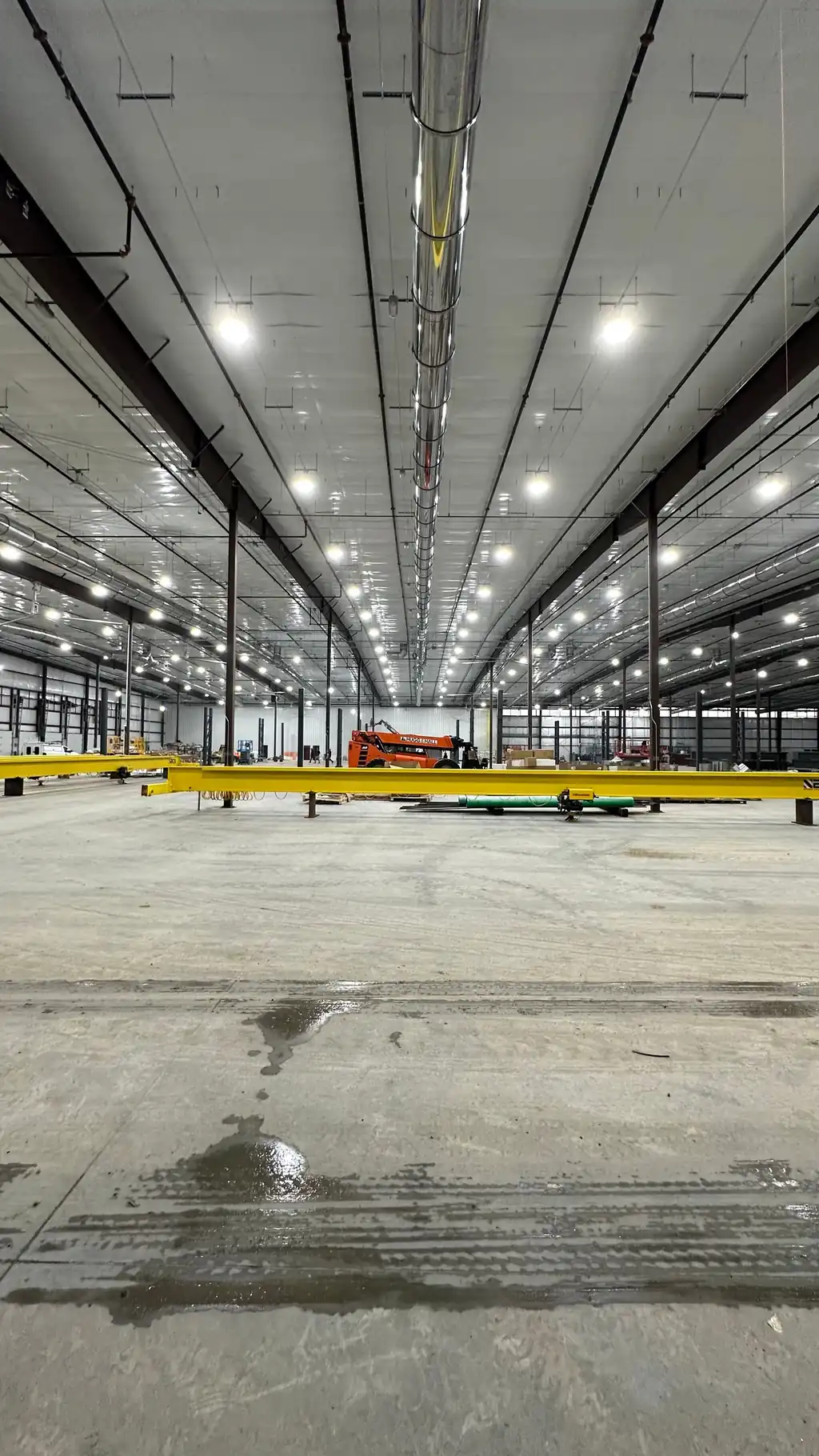
A switchgear submittal is a stack of drawings and equipment data that looks like paperwork until it isn't. Miss a bus rating, miss a breaker size, miss how a new section coordinates with existing gear, and what should have been caught on paper turns into a change order once the equipment shows up on site and doesn't fit the scope everyone bid against. On an industrial project with power distribution, controls, and conveyor automation all riding on the same gear, that miss doesn't stay small.
Accuracy in bidding is the real change order strategy
The line Moore Electric & Logistics uses to describe its own process is short: accuracy in bidding, eliminating unnecessary change orders enabling program cost to be held in check. It sounds like a general principle, but it's really about what happens before a single wire gets pulled. A bid built on a submittal that was actually read, not skimmed, is a bid that holds up once the switchgear installation and power distribution work starts. A bid built on a submittal that got a fast look, with the assumption that the details will sort themselves out once the equipment lands, is a bid with a change order already built into it.
What a real submittal review catches
A switchgear submittal review means checking the equipment against actual site conditions, not just the spec sheet. Bus configuration, breaker types, section widths, and how the new gear ties into whatever power distribution already exists on the building. It means checking clearances, both for the equipment itself and for anyone who has to work on it afterward, and confirming coordination between the switchgear and the electrical controls and lighting circuits it feeds. It also means checking the submittal against the actual electrical demolition and installation sequence, since new switchgear rarely lands in an empty room.
Who actually reads the submittal matters
A submittal reviewed by someone with technical experience in switchgear installation and power distribution specifically catches different things than one reviewed as a formality on the way to a signature. The review has to ask whether the equipment as drawn will actually do what the project needs it to do on this site, not just whether the paperwork is complete. That distinction is where accuracy in bidding either holds up or falls apart.
Why this happens before the change order, not after
Every one of those checks is faster and cheaper to do against a drawing than against equipment sitting on a loading dock. A submittal caught wrong at bid means a revised drawing. A submittal caught wrong after fabrication means a change order, a delay while corrected equipment gets built, and a general contractor's project manager explaining the schedule slip to the owner.
A single point of contact matters here
Switchgear submittals touch power distribution, controls, and often conveyor or process automation on the same project. A single point of contact for each project, reviewing the submittal against all of those scopes at once rather than handing pieces of it to different reviewers, is what catches a conflict between the switchgear and the controls scope before either one gets ordered.
What this looks like on an industrial project
On industrial and commercial power distribution work, from switchgear installation and lighting to conveyor controls and access control, the submittal stage is where the actual cost of the project gets decided. Getting it right doesn't show up as a line item anyone notices. Getting it wrong shows up as a change order everyone notices, and by the time it's noticed, the schedule has usually already absorbed some of the cost.
None of this is about slowing a project down to review paperwork more carefully than it needs. It's about doing the review once, early, with someone who understands power distribution and controls well enough to catch a real conflict rather than just confirm the paperwork is complete. A general contractor's project manager who has been through a bad change order before knows the difference between a contractor who reads the submittal and one who signs it.
- Bus configuration and breaker types match what the site and load actually require
- Clearances are sufficient for both installation and future service access
- Coordination with existing power distribution and controls already on the building
- How the new gear ties into lighting, conveyor controls, or other systems it feeds
- Schedule impact if any of the above needs to change before fabrication
- Sign-off from someone with hands-on switchgear installation experience, not a paperwork check alone
Moore Electric & Logistics, (918) 686-5509
Call (918) 686-5509More articles
What a Duct Bank Actually Costs You If It Goes In Wrong
Once concrete goes over a duct bank, every mistake underneath it becomes a demolition problem instead of a punch-list item.
Why Lighting Retrofits Get Quoted Twice
The first lighting retrofit quote is a fixture count. The one that holds is built after somebody actually checks what's feeding those fixtures.